Wake up, Karate Smurf!
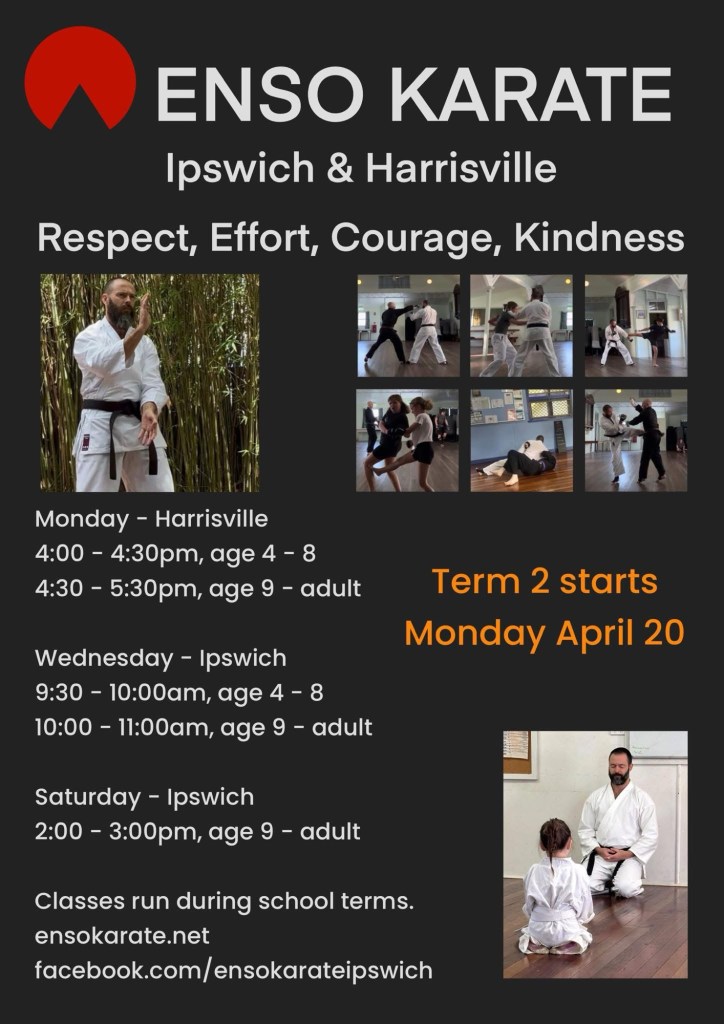
Term 2 starts today.

Wake up, Karate Smurf!
Term 2 starts today.

Greetings all.
I hope everyone has enjoyed the break.
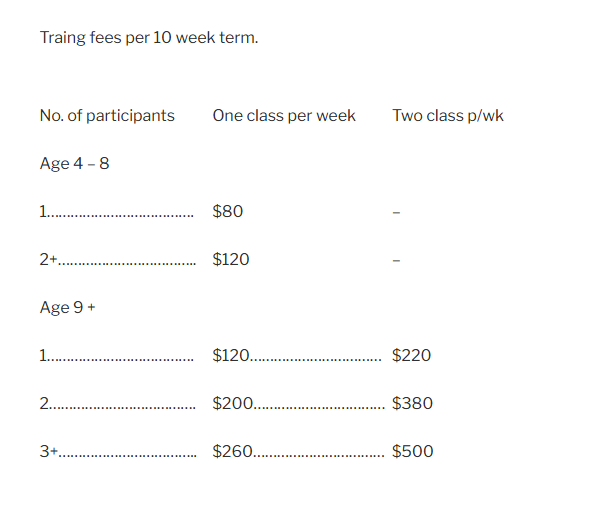
Classes resume for term 2 on Monday 20 April. Timetable and fees remain the same as term 1.
I’ll place a gear order in the coming weeks for gloves and mouth guards (both required for all 9+ members) and uniforms (optional).
See you soon.


Greetings all.
With just this Saturday’s class left, we come to the end of term 1. Thank you to all who have joined us for the past 10 weeks. The new junior class at Harrisville has been well received and will continue next term. Great effort from everyone across all classes.
Term 2 starts Monday April 20 at Harrisville Dojo and Wednesday April 22 at Ipswich Dojo.
Is Kobudo even useful?
In Queensland it’s illegal to carry any sort of implement for the purpose of self-defence. That’s why unarmed arts like Karate are important. Kobudo practice can still be of value. It develops dexterity, hand-eye coordination, spacial awareness, grip strength and more. It also gives us an understanding of how various shaped implements can be used. This is advantageous should we be faced with an armed adversary. Knowing the range and movements of these tools can help us defend against them. We also develop the ability to use any found object for defence: a stick, a book, regular tools, your karate belt, keys, etc.
Kobudo is also just fun and that’s enough reason to do something.
The kama (sickle) in particular can even be used for a spot of gardening. It was originally a farming tool after all.
Week 9 already. Almost at the end of term 1. Just this week and next week to go. Last class will be Saturday April 4, then we have two weeks off. Term 2 starts Monday April 20.
I’ll be making a few short videos for home practice. First one is a six move combination. Suitable for all levels, just go at your own pace, adding one move at a time when you feel comfortable. You can do just one or two moves or work up to the whole sequence. Higher levels should look to increase speed and power in each technique.
Enjoy.
This week in class we have done some work on Tensho kata and its applications. Tensho means rotating palms. This kata focuses on circular/turning, open hand movements aimed at keeping contact with the opponent to feel their movements, defending and redirecting attacks and controlling the opponent with less direct force along with countering in the most direct line from any position. Repetition of the solo kata will develop the required motions for the partner work. Tensho is a requirement for red belt, but all can practice at any time. Practice slowly, coordinating breath with movement.
Now in our 8th year, Enso Karate has reached 40 actively training members across our two dojo!
Martial arts school memberships are known to fluctuate. People come and go. Some stay for a while, some for years. While we have maintained a fairly stable core group, this is the largest we’ve ever been. In part due to the introduction of the junior classes, which have been very well received, but all classes have seen new members join this year. This pleases me greatly. It has been my goal to make Karate accessible and inclusive since day one and this shows that it’s working. I greatly appreciate everyone who is a part of Enso Karate. Thank you all.

6 Kata in 6 Minutes
Video shown at 4x speed and then normal speed.
One can do a full run through of our entire kata curriculum in just six minutes (provided you have put time in to learning them, as you should). This is a great way to do a daily practice. Alternatively, pick one kata to practice several times.
Practice begins by getting up and doing one thing. Once you get started, it’s easy to continue. Practice doesn’t have to be an hour long. A few minutes is beneficial. A few more is better. You just have to start.
Get up. Practice.
Across both Ipswich and Harrisville Dojos we now have several students approaching black belt. This is a good time to think about what it takes to achieve black belt, not the specific requirements but the individual attitude to training.
Improving any skill such as drawing, learning a language, playing an instrument, any sport or Karate takes a commitment to practice. This is a choice. No one can make you do this (well maybe parents can force kids to practice but this doesn’t always get the intended result). You have to decide that you want to improve and take the required steps. You have to want to improve enough that you will put the effort in to building a habit or routine of practice in order to reach your goal. Maybe you’re not quite in a place where you want it badly enough and that’s ok. There are many things we do just for fun. Karate can be one of them. Even then, getting better at something generally makes it more fun. There does come a point in Karate where you may have to decide if you want to train for your black belt. This absolutely requires choosing to improve. There are requirements to achieve black belt that cannot be met without dedicated practice and intentional effort. It’s not an automatic hand-out. It must be earned. Basic techniques, kata knowledge and application, general strength and fitness, strategy and awareness all need to be addressed to achieve black belt and these things take time to improve. If you genuinely want to earn your black belt, make the choice to improve now. I can remember back when I had been training for a few years and decided that yes, I would earn my black belt. From that point on I practiced every single day, sometimes just a few minutes, until I achieved black belt. I made the choice. I built a habit of practice. It worked. I really do recommend daily practice of some sort. Short, frequent practice can be more effective than infrequent, long practice. Once you get into a routine of practice, it’s easy to work on the things you’re good at. The real challenge is working on the things you find hard. Maybe it’s strength training or cardio. Maybe you have to put more effort into kata practice. We have to balance our skills and attributes to be a well rounded Karateka. There will always be things you specialize in but don’t neglect the other areas.
In short, if you want to be a black belt, practice. A lot.
Here’s a general guide to things you can do to practice at home. If you would like something more specific let me know.