All classes will be on this week.
Monday, Tuesday, Wednesday, Saturday.
Last week of term 2.
We will have a yellow belt grading on Monday for Sadie and a brown belt grading on Wednesday for Damara and Bella.
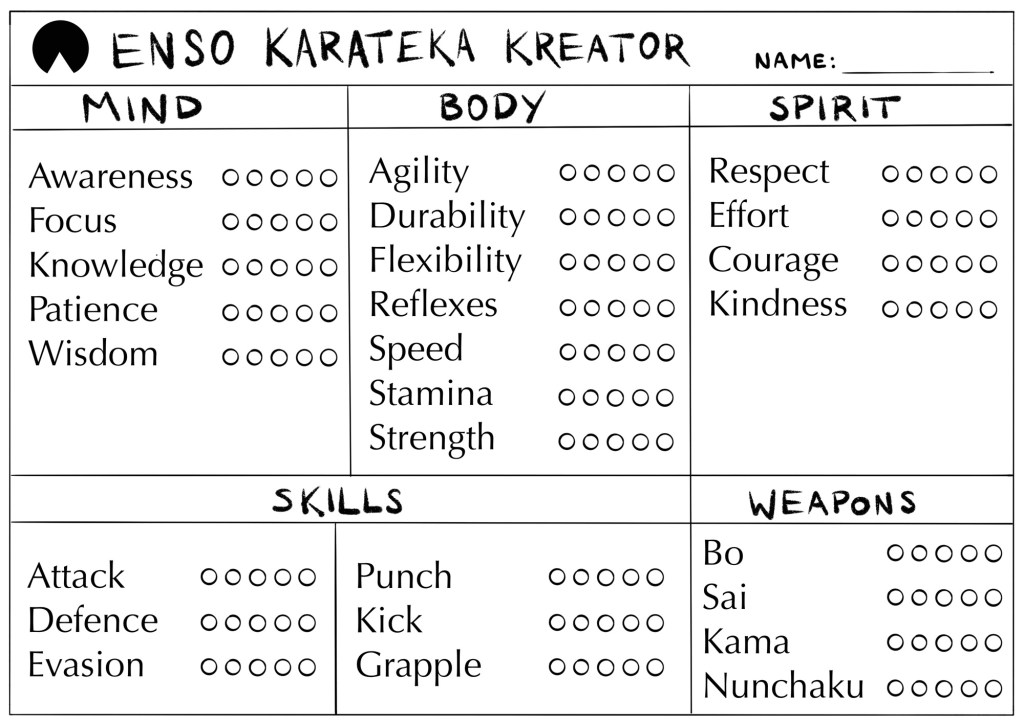
Karateka Kreator
Today I’ve created a Karateka Kreator character sheet. Some of you may be familiar with this concept from RPG tabletop or video games. I thought it could be fun for students to have a go filling out their karate attributes. It could be helpful to identify existing strengths and see where more could be done. It wasn’t easy to choose the attributes but I tried to keep it simple while covering important areas. Incidentally, Mind, Body, Spirit are the Three Battles that Sanchin kata refers to.
You can print it out or use a mark up feature on your device. Simply fill in the dots to match your level of each attribute. 5 dots would be extremely advanced, such as an Olympic athlete or master wizard, so be honest when filling it in. Nobody would ever have 5 dots in everything! It’s ok to have 1 or no dots on something too. Having empty dots leaves room for improvement. You don’t have to show anyone but you can if you want and I’d love to see some. Happy to help if anyone isn’t sure about something. I’ll do one for myself as an example. This could be a great way to set some goals for self improvement. You could also use it to create a fictional character!
Classes cancelled
Hi everyone.
Unfortunately I have a cold so to avoid spreading it we will skip classes on Monday, Tuesday and Wednesday this week. So sorry.
We will have one more week left of term 2 after this week, including the Ipswich grading so hopefully I’ll be fine by then.
Fee credit given for next term.
Karate Books 3
Karate Books Part 3
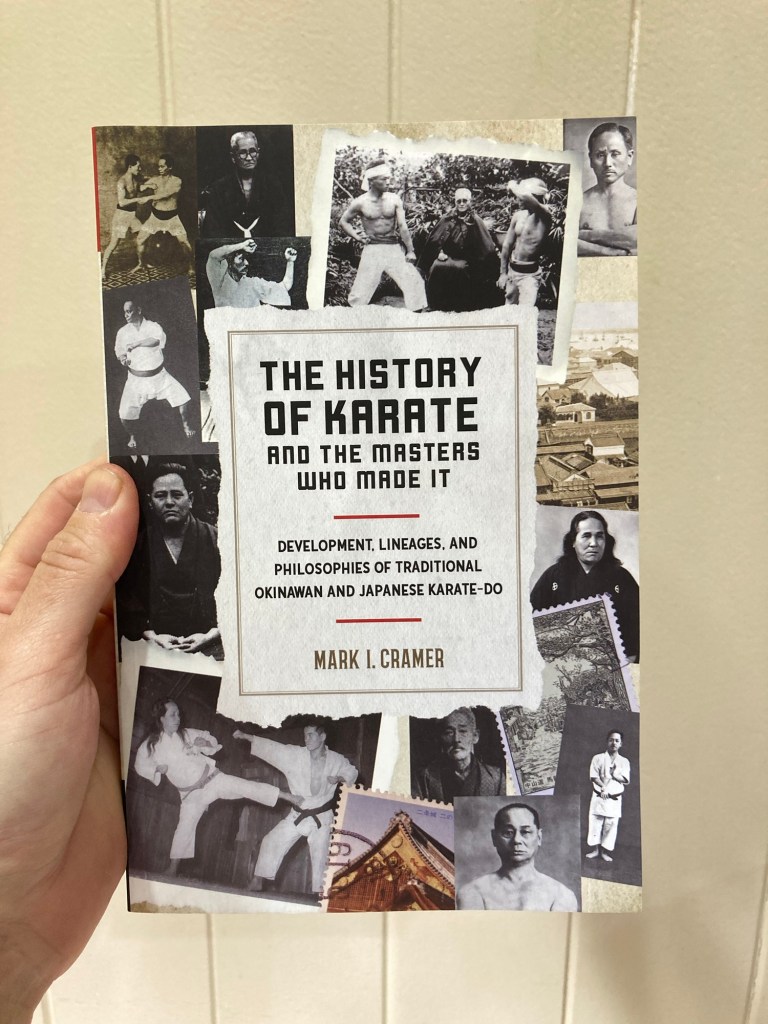
“THE HISTORY OF KARATE AND THE MASTERS WHO MADE IT” by Mark I. Cramer. A good book. I very much enjoyed this. Concise yet comprehensive. It covers the cultural context of Karate’s development, Karate philosophy, biographies of notable masters and more.
Karate Books 2
Karate Books Part 2
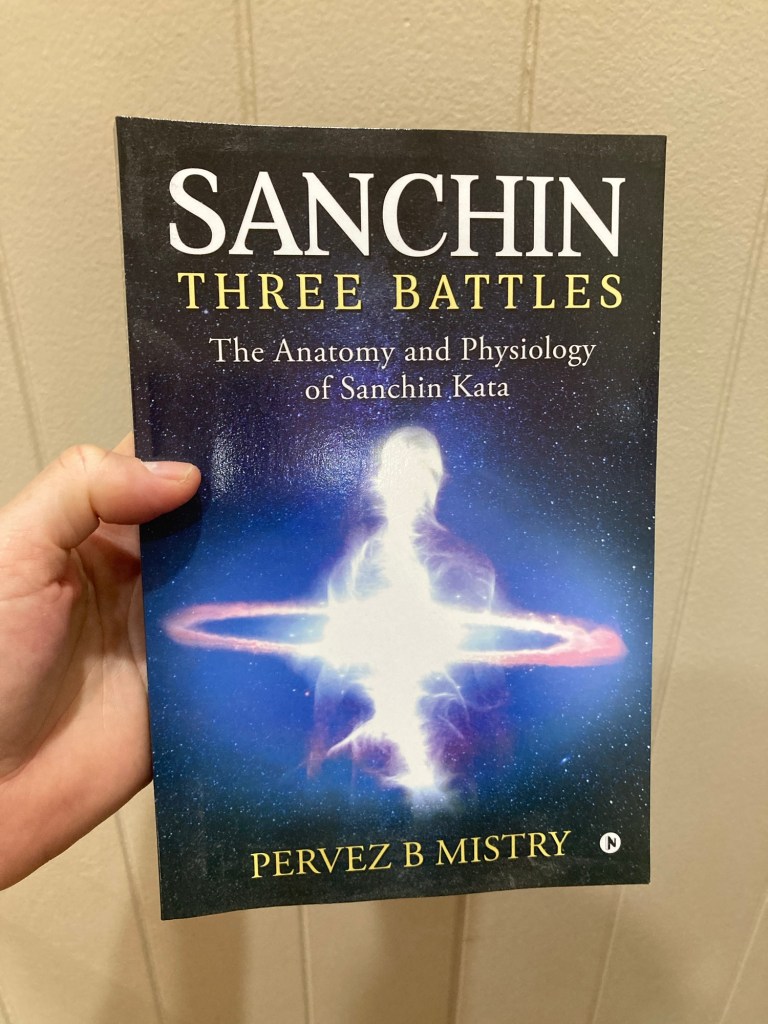
SANCHIN Three Battles by Pervez B Mistry.
A whole book dedicated to the best kata, Sanchin!
Sanchin kata develops mind, body and spirit (the three battles), all essential aspects of an effective Karateka. I practice Sanchin daily and there is always something for me to improve on. It is simple in appearance yet highly complex on deeper study. This book goes into great detail on many aspects of Sanchin kata, such as how to perform the kata, breathing and tension with descriptions of anatomy and why things are done, the effects of Sanchin on the musculoskeletal, respiratory, and nervous systems and practical fighting applications of Sanchin. Highly recommend for anyone wanting to truly understand Sanchin and its value.
Karate Books 1
Karate Books! A student was asking me about books recently so I thought I’d do a few posts on some karate books. There are so many books out there on karate; history, techniques, philosophy… Not a lot of material was documented in the early days of karate but there are a few books by the “Old Masters” and many by modern authors.
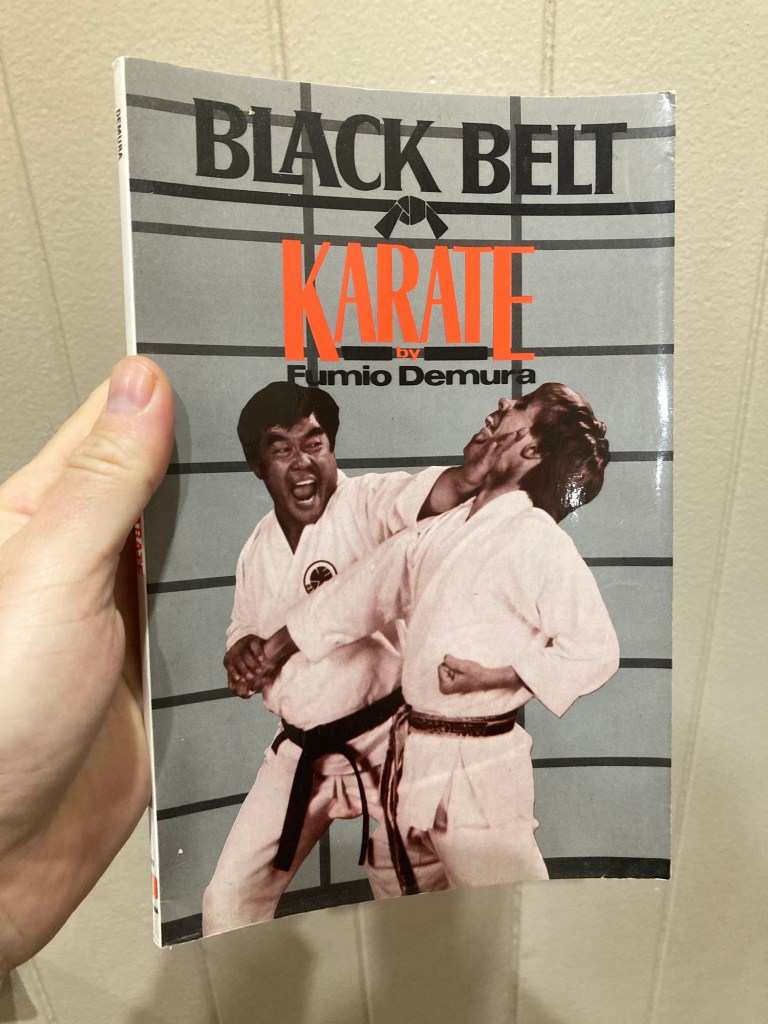
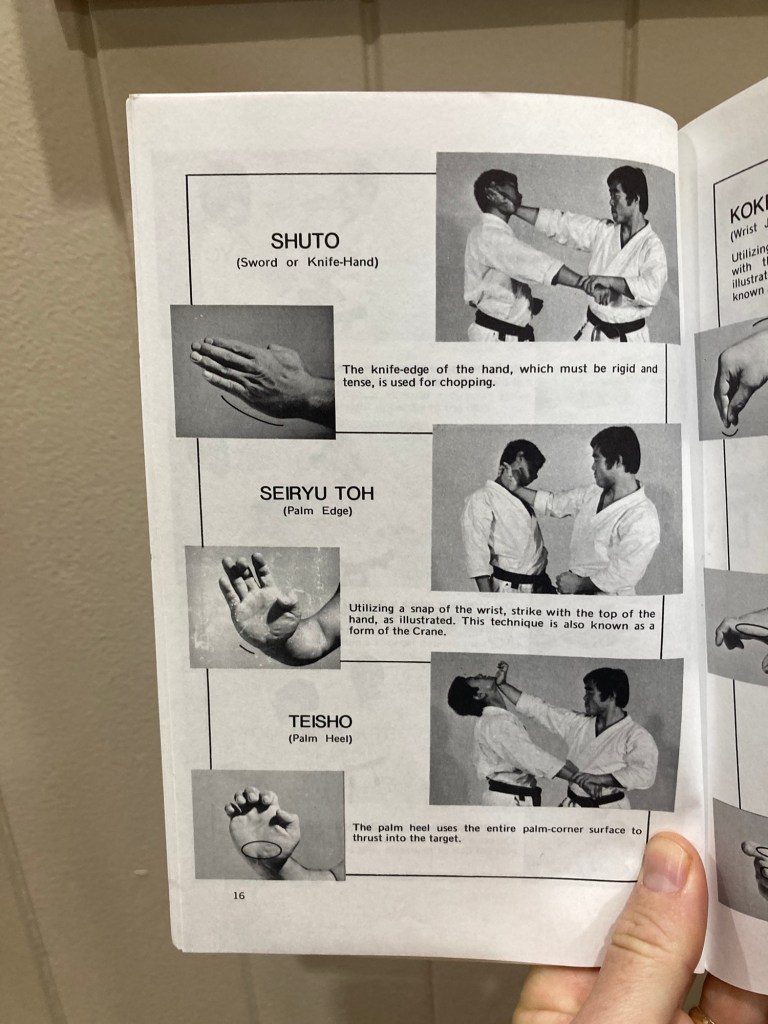
Karate by Fumio Demura was the first karate book I acquired. Demura was a modem master who sadly passed in 2023. He has many books on karate and Kobudo. This one is a sort of technique textbook. It goes though stances, strikes, kicks, blocks and more, with photos demonstrating how to perform the moves. A great reference book that I often refer to.
Fun fact: Fumio Demura was the stunt double for Pat Morita’s Mr. Miyagi character in The Karate Kid movie.
New Class Next Week
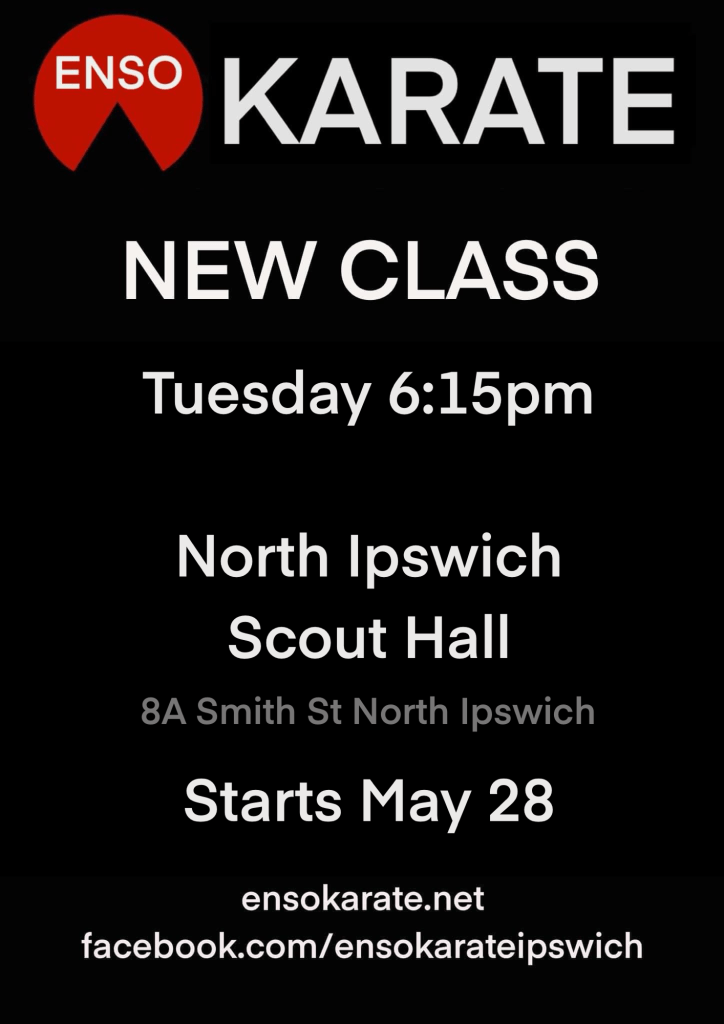
Our new Tuesday night class starts next week, May 28. Come along for a free trial. Age 7-adults. North Ipswich Scouts Hall. 6:15pm
Classes include a variety of training methods including solo kata (forms), partnered self-defence applications, pad work, sparring, strength and flexibility exercises. At higher levels we practice traditional Okinawan Kobudo weapons such as the bo, sai and kama.
Benefits of Karate
- improved physical strength, cardio fitness and flexibility
- develop self-defence skills
- build self-confidence
- have fun with friends or family
- improve self-discipline and awarenss
New Class
New class starting May 28
Tuesday 6:15pm
North Ipswich Scout Hall
8A Smith St North Ipswich
Japanese Karate Terms
While we use English in class for ease of learning, it can be interesting to learn some Japanese terms. Here’s a list of commonly used words in Karate.
General Terms
Karate: empty hand
Karteka: Karate practitioner
Karategi: karate wear (uniform)
Obi: belt
Dojo: training hall
Dojo kun: training hall rules
Sensei: one who came before, teacher
Seiza: kneeling position
Mokuso: silent thought (meditation, clearing the mind)
Hajime: begin
Yame: stop
Kumite: crossing hands (sparring)
Kata: form
Bunkai: breakdown or dissection (of kata movements)
Oyo: application (of kata techniques)
Zanshin: remaining mind (focused awareness)
Mushin: no mind (clear from though the Karateka acts on pure instinct/flow state)
Kyu: rank level (below black belt)
Shodan: beginning level (1st degree black belt)
Kuro Obi: black belt
Kiai: energy join (a shout summoning all of your energy on a technique)
Kata
Sanchin: three batttles (mind, body, spirit)
Tensho: turning palms/hands
Saifa: smash and tear
Kusanku: named after a Chinese martial artist
Rohai: image of the heron
Pinan: free from harm
Stances
Zenkutsu dachi: forward or front stance
Shikodachi: square stance
Nekoashi dachi: cat stance
Sanchin dachi: three battles stance
Target areas
Jodan: high level, head and neck
Chudan: mid level, torso
Gedan: low level, below belt, legs
Strikes
Tsuki: thrust/punch
Oi zuki: step-over/lunge punch
Kizami zuki: snap/jab punch
Mae ken zuki: front fist thrust/ front hand punch
Gyaku zuki: reverse thrust/ back hand punch
Shuto uchi: knife hand strike
Nukite zuki: spear hand thrust
Tettsui uchi: hammer fist strike
Empi uchi: elbow strike
Kicks
Keri: kick
Mae geri: front kick
Mawashi geri: roundhouse kick
Gedan mawashi geri: low/leg roundhouse kick
Yoko geri: side kick
Ura mawashi geri: hook kick
Ushiro geri: spinning back kick
Mae tobi geri: front jump kick
Yoko tobi geri: side jump kick
Hiza geri: knee strike
Kin geri: groin kick
Defence
Uke: receive (commonly called block but it’s more than that)
Age uke: rising receive/block
Soto uke: from outside receive/block
Uchi uke: from inside receive/block
Gedan barai: downward sweep/block
Shuto uke: knife hand receive/block
Mawashi uke: roundhouse receive/ circling hands
Numbers
1: ichi
2: ni
3: san
4: yon/shi
5: go
6: roku
7: nana/shichi
8: hachi
9: kyu
10: ju
It is not required to learn all of this but I may occasionally use these terms in class. The list ended up a lot longer than planned!
Side note: Karate originally developed in Okinawa, which has its own language, Uchinaguchi. Karate later became popularised in Japan and spread to the world from there, hence the common use of Japanese terminology.
Enso Karate Dojo Kun
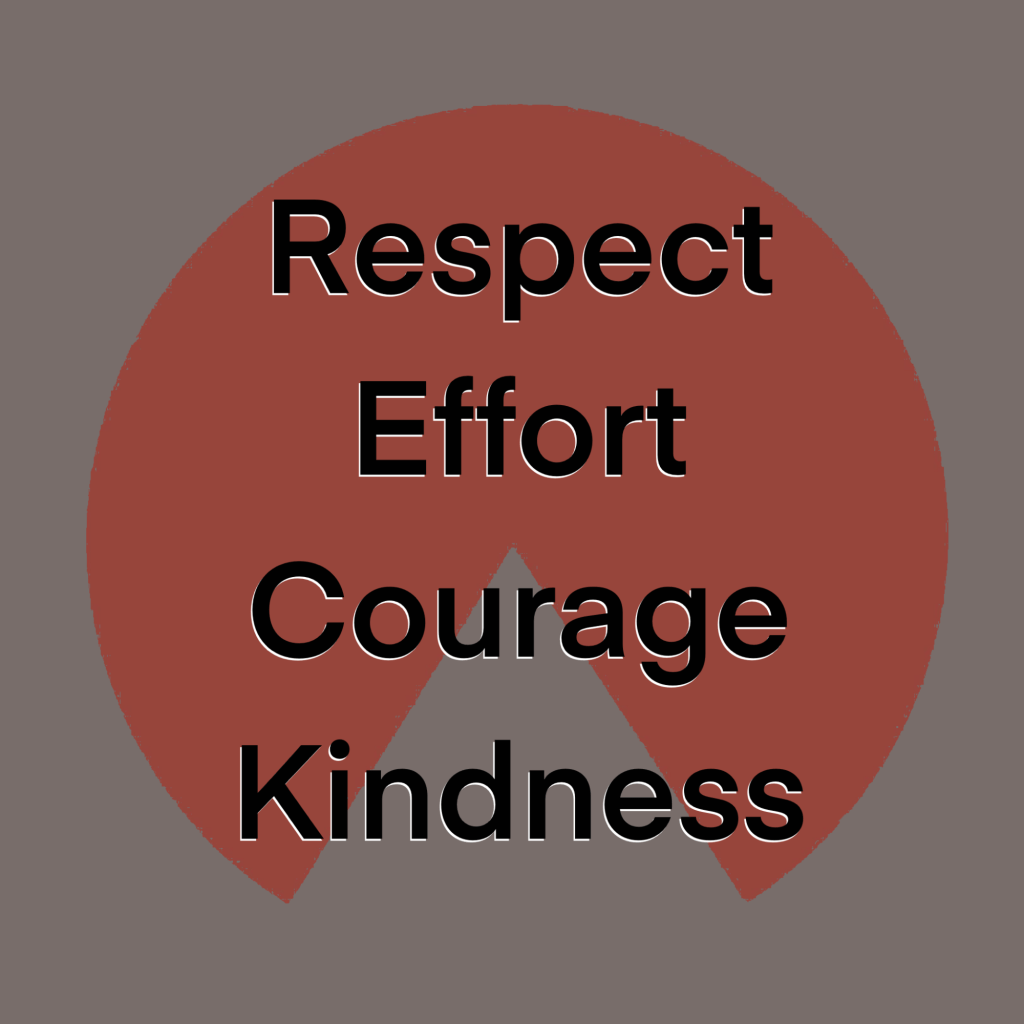
Respect, Effort, Courage, Kindness.
 Enso Karate